

All Industries
Upcoming Changes to Qlik's® Language-Centric Analytics
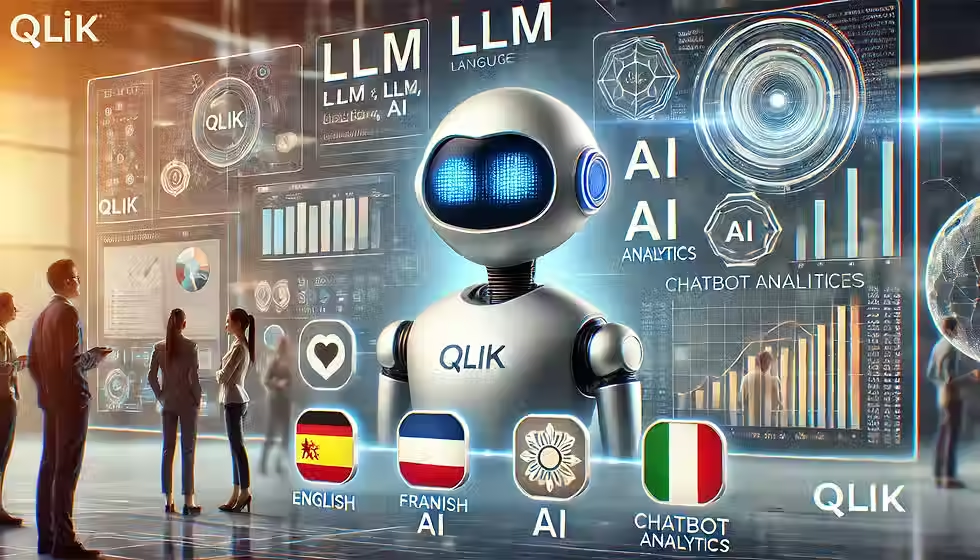
Language-centric analytics is reshaping how users interact with data. Moving from dashboards and filters to natural language, generative insights, and AI-assisted discovery. Qlik's<strong>®</strong> upcoming enhancements signal a shift toward more intuitive, conversational analytics experiences that expand access without sacrificing governance.
July 1, 2024
4 min read
AI & Machine Learning
Author
Why It Matters
Natural language analytics lowers the barrier to insight for non-technical users
AI-driven responses must still operate within governed, trusted data models
Language interfaces shift analytics from "build and explore" to "ask and act"
Organizations need to prepare for adoption, trust, and scale. Not just features
The Evolution Toward Language-Centric Analytics
Qlik's language-centric analytics vision focuses on enabling users to ask questions in natural language and receive contextual, explainable responses. Rather than replacing dashboards outright, these capabilities augment existing analytics by accelerating discovery and reducing friction for business users.
What's Changing in Qlik's Approach
Upcoming updates expand how users interact with data using conversational prompts, AI-assisted insight generation, and smarter contextual understanding. These changes are designed to work across the analytics lifecycle. Supporting exploration, explanation, and action while maintaining consistency with governed data sources.
Governance Still Matters in AI-Driven Analytics
As analytics becomes more conversational, governance becomes more important, not less. Language-centric experiences must respect role-based access, certified datasets, and lineage to ensure users receive accurate answers from trusted data.
Preparing Your Organization for Language-Driven Analytics
Adopting these capabilities requires more than turning on features. Organizations need:
Clean, well-modeled data
Clear ownership and stewardship
Training on how to ask effective analytical questions
Alignment between technical teams and business users
Without this foundation, AI-driven analytics risks creating confusion rather than clarity.
Looking Ahead
Language-centric analytics represents a major step toward more human-centered data experiences. Organizations that pair these tools with strong data foundations and governance will be best positioned to unlock value while maintaining trust and control.
If You Only Do Three Things
Prepare governed, trusted datasets before enabling language-centric analytics
Align business and technical teams on how AI-driven insights will be used
Treat conversational analytics as an accelerator. Not a replacement for good data practices
Related Insights
AI & Machine Learning
4 min read
Upcoming Changes to Qlik's® Language-Centric Analytics
Language-centric analytics is reshaping how users interact with data. Moving from dashboards and filters to natural language, generative insights, and AI-assisted discovery. Qlik's<strong>®</strong> upcoming enhancements signal a shift toward more intuitive, conversational analytics experiences that expand access without sacrificing governance.